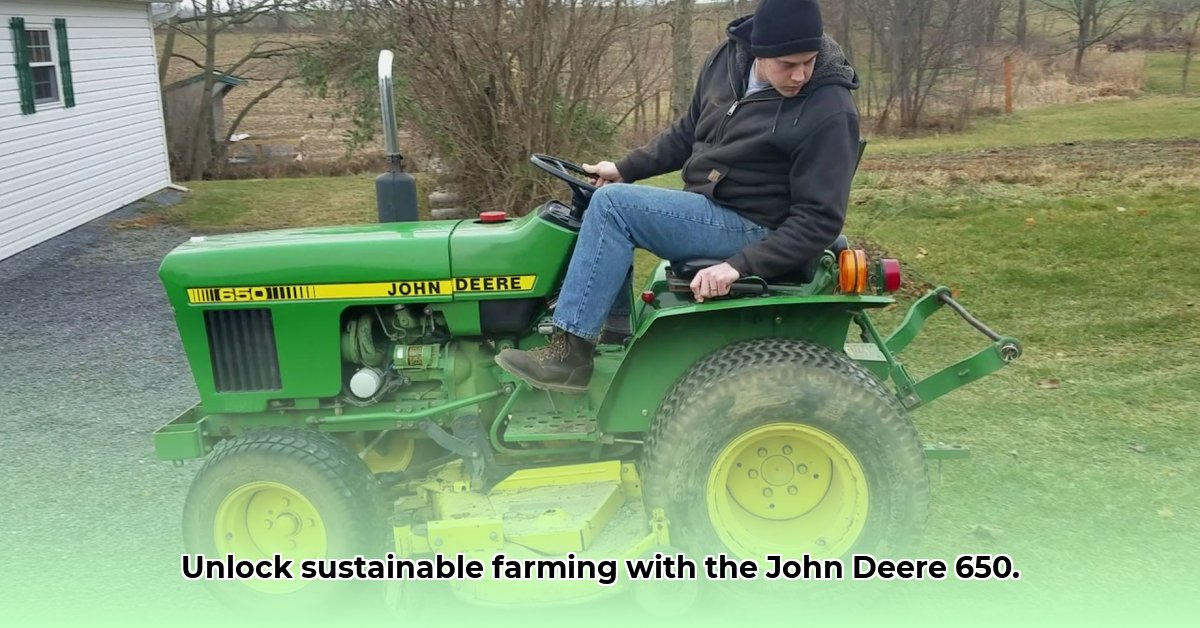
The John Deere 650: a classic workhorse, representing a significant chapter in agricultural history. But does its age align with the demands of modern, sustainable farming practices? This detailed analysis examines the tractor's specifications, assessing their implications for today's environmentally conscious farmer. We'll explore its capabilities, maintenance needs, and long-term sustainability to provide you with the information needed to make an informed decision. For comparison, see specs on a more powerful tractor like this 75 HP John Deere.
Under the Hood: Engine and Power
The John Deere 650 typically features a Yanmar 2T80UJ three-cylinder diesel engine, generating approximately 17 horsepower. This power output, while adequate for smaller operations or specific tasks, may limit capabilities for large-scale farming or heavy-duty applications. The engine's horsepower can vary slightly depending on the year of manufacture and testing methodologies. Before making a purchase, carefully assess whether its power output meets your specific farming needs. Is 17 horsepower sufficient for your operations, or would a more powerful machine be a wiser investment in terms of efficiency and long-term productivity?
Size and Capabilities: Dimensions and Maneuverability
The John Deere 650's compact dimensions are a significant advantage in constrained environments like orchards, vineyards, or areas with numerous obstacles. Its maneuverability surpasses that of larger tractors. However, this compactness also limits the size and type of implements it can handle, impacting the scale of operations it can undertake. The tractor's power take-off (PTO) and hydraulic system allow for attachment of various implements, increasing its versatility, but these are also constrained by the tractor's size. Can the tractor's size and implement capacity handle the scope of your farming operations?
Performance and Fuel Efficiency: Cost and Environmental Impact
Compared to modern tractors, the John Deere 650's fuel efficiency is lower. This translates to higher operating costs and a larger carbon footprint due to increased fuel consumption. The absence of modern emission control systems contributes significantly to its environmental impact. While the initial purchase cost of a used 650 may be attractive, the long-term operational costs related to higher fuel consumption must be factored into the total cost of ownership. How do the ongoing fuel costs compare to the potential savings of a lower initial purchase price? What is the environmental trade-off, and how can you mitigate it?
Maintenance and Parts Availability: A Vintage Tractor's Challenges
Maintaining a John Deere 650 presents unique challenges compared to modern tractors. Parts sourcing can be more time-consuming and potentially expensive, requiring searches across online marketplaces and specialized dealers. While this can foster a deeper understanding of mechanical systems, it also necessitates meticulous planning for maintenance and repair. Do you have the skills or access to resources necessary to handle these challenges? Can you effectively manage potential downtime associated with part acquisition and repair?
Cost-Benefit Analysis: Total Cost of Ownership
The lower initial purchase price of a used John Deere 650 is an attractive advantage. However, this must be balanced against the higher ongoing maintenance costs, potentially increased repair expenses and higher fuel consumption. A comprehensive cost-benefit analysis, considering all these factors, is crucial before making a purchase decision. Does the lower upfront investment compensate for the higher long-term costs of operation and maintenance? What is the overall total cost of ownership over the tractor’s projected lifespan?
Sustainability Considerations: Mitigation Strategies
The John Deere 650's environmental impact is significant due to its fuel consumption and emission levels. While some farmers might find its vintage charm appealing, it’s important to address its inherent limitations. Several strategies can mitigate this impact:
- Biofuels: Research is ongoing regarding the potential for biofuel adaptation in older engines like the Yanmar 2T80UJ. However, the feasibility and potential performance impact should be thoroughly investigated before implementation.
- Carbon Sequestration: Employing sustainable farming practices that contribute to carbon sequestration can offset some of the tractor's emissions.
- Responsible Disposal: Responsible end-of-life recycling or component reuse is crucial to minimizing environmental harm.
What sustainable practices can you implement to offset the tractor's environmental impact?
John Deere 650 Tractor Specs Summary Table
| Specification | Details | Considerations |
|---|---|---|
| Engine | Yanmar 2T80UJ Diesel | Lower fuel efficiency; higher emissions than modern engines. |
| Horsepower | ~17 HP | Sufficient for smaller operations; may limit larger tasks. |
| Dimensions | Compact | Excellent maneuverability; limited implement size. |
| PTO & Hydraulics | Present | Supports various implements; choices are limited by tractor size. |
| Maintenance | More intensive than modern tractors. | Increased labor and potential cost of parts sourcing. |
| Fuel Efficiency | Relatively low | Will likely result in increased operational costs. |
| Emission Controls | Absent | Contributes to higher greenhouse gas emissions. |
| Sustainability | Requires careful planning | Consider biofuel potential, responsible disposal, and carbon offsetting. |
Actionable Steps for Sustainable Use
- Assess Parts Availability: Thoroughly research part sourcing to minimize potential downtime.
- Establish a Maintenance Schedule: Preventative maintenance is critical for extending the tractor's lifespan and reducing costly repairs.
- Monitor Fuel Consumption: Track fuel usage to identify opportunities for efficiency improvement and to estimate operational costs.
- Explore Biofuel Compatibility: Investigate the possibility of biofuel conversion, understanding the potential costs and challenges.
- Plan for Responsible Disposal: Research environmentally conscious disposal options to reduce the tractor's end-of-life environmental impact.
The John Deere 650 presents a complex equation for modern sustainable farming. Its affordability and maneuverability are attractive, but its limitations in fuel efficiency, emission controls, and maintenance needs demand careful consideration. A thoroughly informed decision requires weighing its advantages against its disadvantages within the context of your specific farming operation and sustainability goals.